

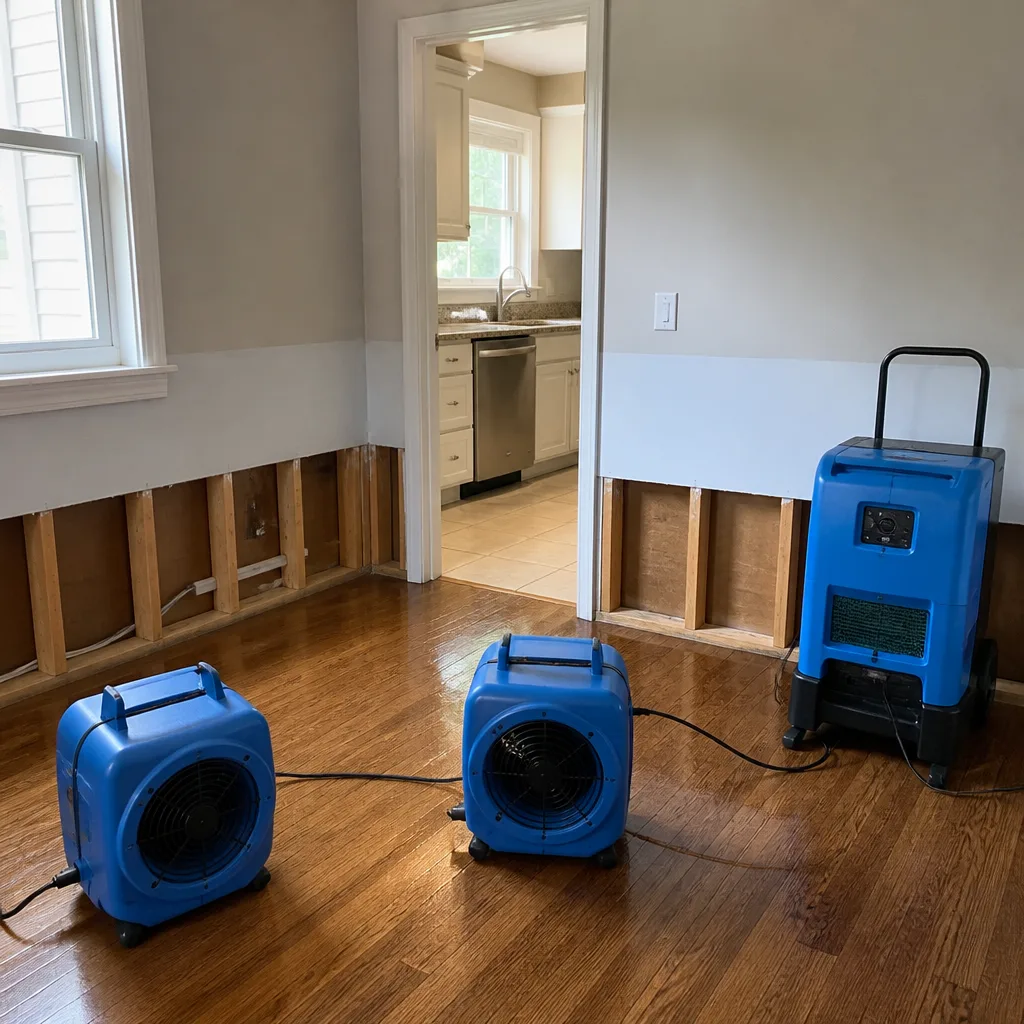
 Water damage drying
 Fire & smoke cleanup
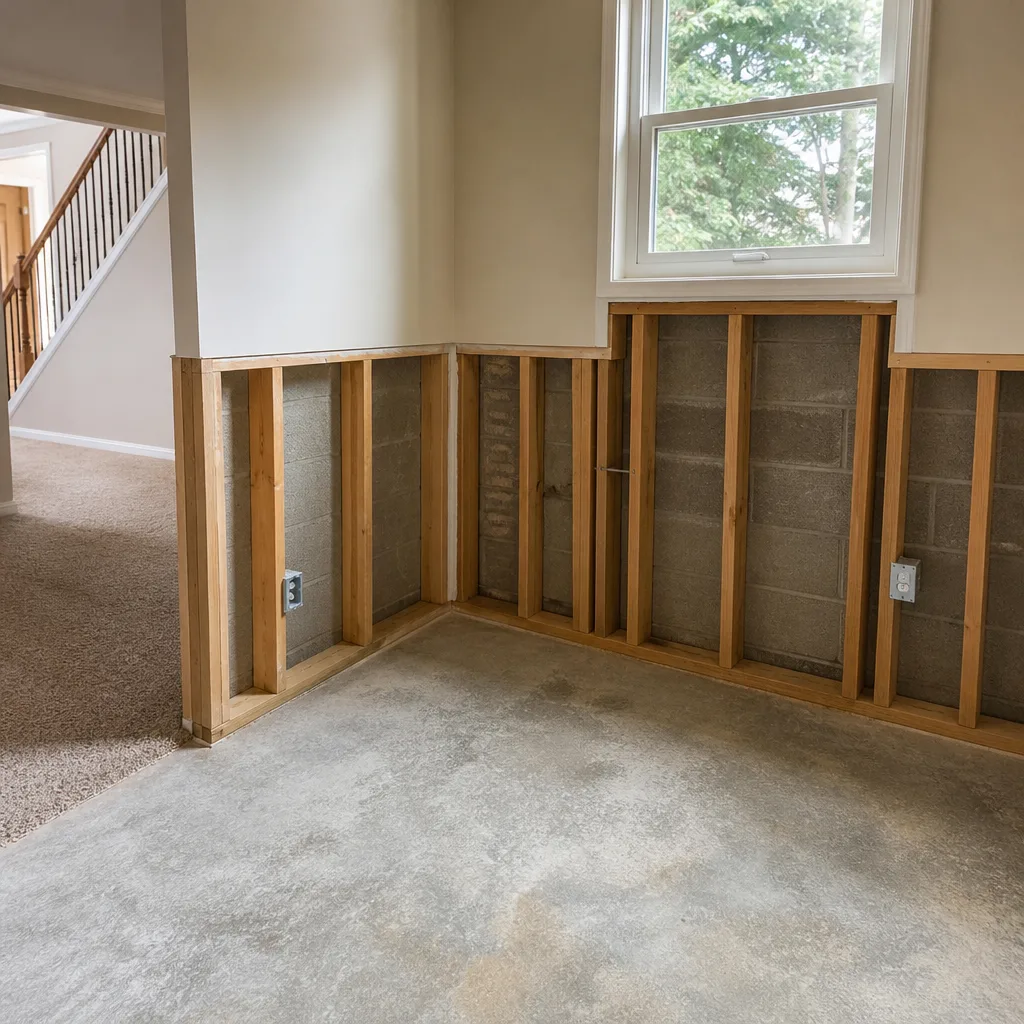 Mold remediation
 Storm response
 Sewage cleanup
 Reconstruction
Free visual inspection and a written scope of work before any mitigation begins - photos, moisture readings, and drying logs go in your claim file
The scope we write is the scope we bill. Anything new gets shown to you, in writing, before we touch it.
Get your free estimateFast, Reliable Water Damage Restoration Across Austin
When a supply line bursts behind a kitchen wall or a spring thunderstorm pushes water under your back door, you need a crew that knows Austin homes, Austin weather, and Austin plumbing. Dryden Restoration Austin answers every call with a live person, 24 hours a day, and dispatches local technicians who understand what slab-on-grade construction means for water migration. We serve every Austin neighborhood, from Mueller to Circle C, and we arrive with a written price before any tool touches your home. Call (361) 326-2081 the moment you see water. We’ll tell you exactly what to do in the first ten minutes, then get a crew rolling.
Why Dryden Restoration Austin Is Austin’s Preferred Water Damage Restoration Company
Homeowners across Austin tell us the same thing: they’ve been burned by contractors who no-showed, lowballed a price then ballooned it at the door, or finished a repair that failed weeks later. We built Dryden Restoration Austin to be the opposite. We’re an independently owned and operated Kingswell company, serving communities since 2005 with a simple set of commitments: a written price before work begins, a named arrival window, and a 365-Day Done Right Promise in writing on every job. We also offer Fire Damage Restoration in Austin. If a covered repair fails within a year, we come back and make it right at no charge.
Our Austin crews know the housing stock here. We’ve dried out 1970s slab-on-grade ranches in Windsor Park, 1950s pier-and-beam bungalows in Travis Heights, and 2000s builder-grade two-stories in Avery Ranch. That local experience means we know where water hides in each construction type, how Austin’s expansive clay soils change drying strategy, and which permits or code requirements apply. Every technician is background-checked and arrives in Dryden uniform, so you know exactly who you’re letting into your home. Our work follows IICRC, RIA, and IFA standards, and we use the same professional-grade equipment large commercial crews run: Dri-Eaz, Phoenix, and XPOWER.
Restoration work we handle
Water Mitigation in Austin
Water mitigation in Austin means stopping the active spread of water and beginning controlled drying before secondary damage takes hold. In a city where flash-flood alley geography meets slab foundations and hard, limestone-filtered water eats through old galvanized supply lines, mitigation is the difference between a one-room cleanup and a full rebuild. The typical Austin homeowner calls us when they see water pooling where it shouldn’t be: a wet carpet in the hallway, a soft drywall patch near the baseboard, or a water stain spreading across the ceiling after a storm. Water Damage Restoration for a standard room runs $900 to $2,500 depending on how far water migrated under the slab or into wall cavities.
Emergency Extraction and Containment
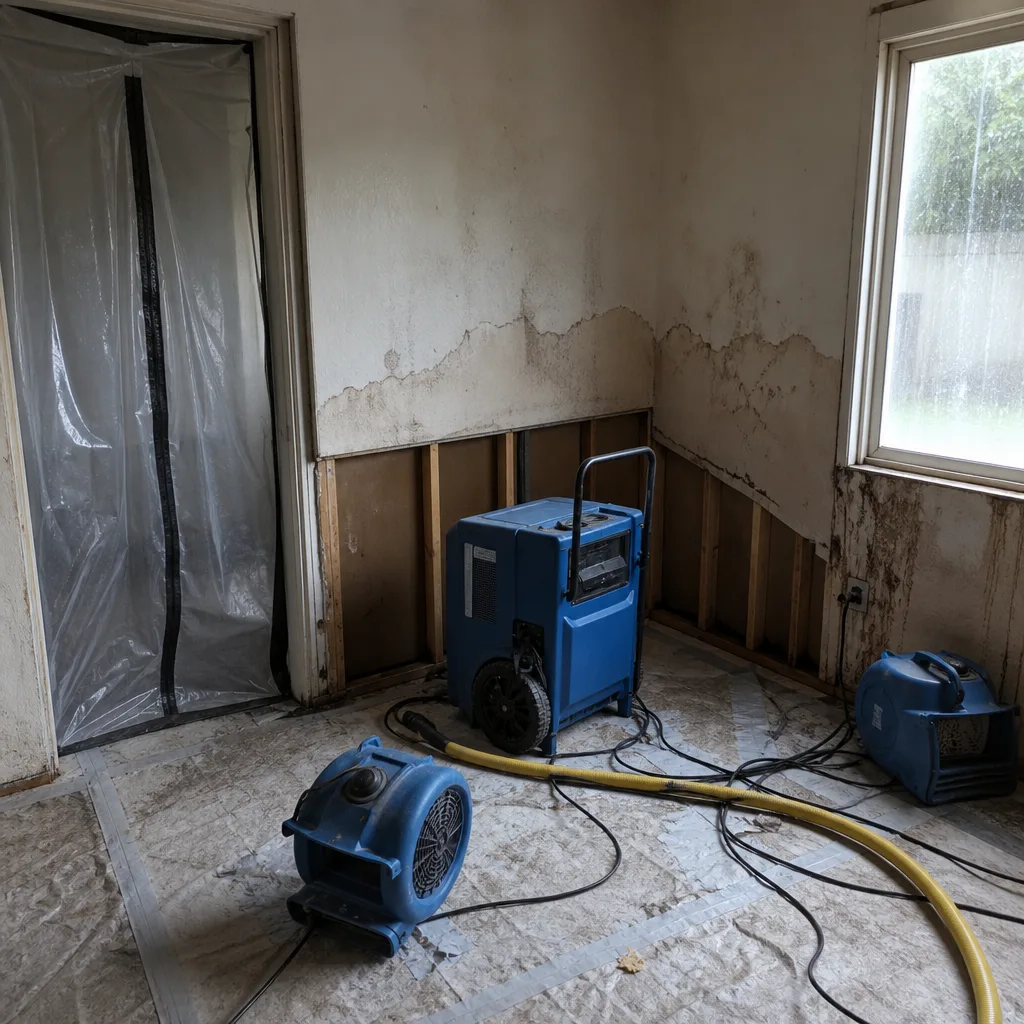
Our first priority is removing standing water and isolating the affected area. We set up containment barriers, map moisture levels with meters, and extract water using truck-mounted units and portable extractors. If the water is Category 1 from a broken supply line, we can often save drywall and flooring by drying in place rather than cutting everything out.
Psychrometric Drying and Moisture Monitoring
Drying is not just running fans. Our crews calculate psychrometric conditions, which is the relationship between air temperature, surface temperature, and relative humidity (RH), the amount of moisture in the air. We adjust dehumidifier placement and airflow daily, document moisture levels with drying logs, and only stop when readings return to pre-loss conditions. That documentation is yours to keep and share with your insurer.
Flooded Basement in Austin
A flooded basement in Austin is less common than in northern cities, but when it happens, it’s usually tied to one of two local conditions: a stormwater surge overwhelming the foundation drains, or a slab leak in a split-level where the lower level sits below grade. Basement water removal for a typical 500-square-foot space runs $1,200 to $3,800, depending on whether we’re dealing with clean water or stormwater that carries silt, bacteria, and debris from the yard. Austin’s eastern flatlands and low-lying neighborhoods along creeks see the worst of it during spring and fall thunderstorm seasons.
Pump-Out and Crawlspace Drying
When water enters below grade, we start with high-volume pump-out and then attack the moisture that soaked into concrete, framing, and stored belongings. In pier-and-beam bungalows, the crawlspace is usually the source: after a heavy rain, water pools under the house and wicks upward into floor joists and subfloors. We inspect the crawlspace on every basement or lower-level flood because Austin clay holds water against the foundation longer than sandy soils do.
Flooring and Baseplate Assessment
Water under laminate or vinyl plank often rots the baseplate before you see any damage on the surface. In flooded basements and split-levels, we pull back affected flooring, check for mold on the bottom side, and document what can be dried versus what must be replaced. You get a written scope with line-item pricing before we start any demolition.
Trusted Brands We Service in Austin
We work on and recommend equipment from the brands Austin homeowners actually have in their homes and the professional brands we run ourselves. Our drying fleet includes Dri-Eaz and Phoenix dehumidifiers, XPOWER air movers, and Injectidry systems for hard-to-reach wall and ceiling cavities. Because we’re local to Austin, we keep common replacement parts stocked locally, which means faster turnaround when a water heater pan fails, a sump pump burns out, or a supply valve needs replacing. We explain the equipment in plain language, so you know what each machine does and why it’s running. No mystery equipment, no hourly billing without context.
Common Water Damage Restoration Problems We See in Austin Homes
- Slab leaks from shifting foundation clay. Austin’s expansive clay soil swells and contracts with moisture, cracking concrete slabs and the supply lines running through them. Water migrates under flooring, rots baseplates, and often goes unnoticed until mold appears or floors buckle.
- Failing cast-iron and galvanized supply lines in 1960s-80s ranches. East of I-35 and through the southern quadrants, older ranch homes hide galvanized plumbing behind remodeled walls. Under hard water, these lines develop pinhole leaks that drip for weeks inside wall cavities, feeding mold growth you can’t see.
- Stormwater intrusion in low-lying and creek-adjacent neighborhoods. Austin’s flash-flood geography sends water into homes fast. Areas along Shoal Creek, Waller Creek, and the eastern flatlands see foundation-level intrusion that requires immediate extraction and targeted drying.
- Crawlspace dampness and mold in central pier-and-beam bungalows. Bungalows in neighborhoods like Hyde Park and Travis Heights often have vented crawlspaces that stay damp after storms. That moisture wicks into floor joists and subfloors, creating chronic mold problems that return if not addressed at the source.
See the difference
 Before
 After
After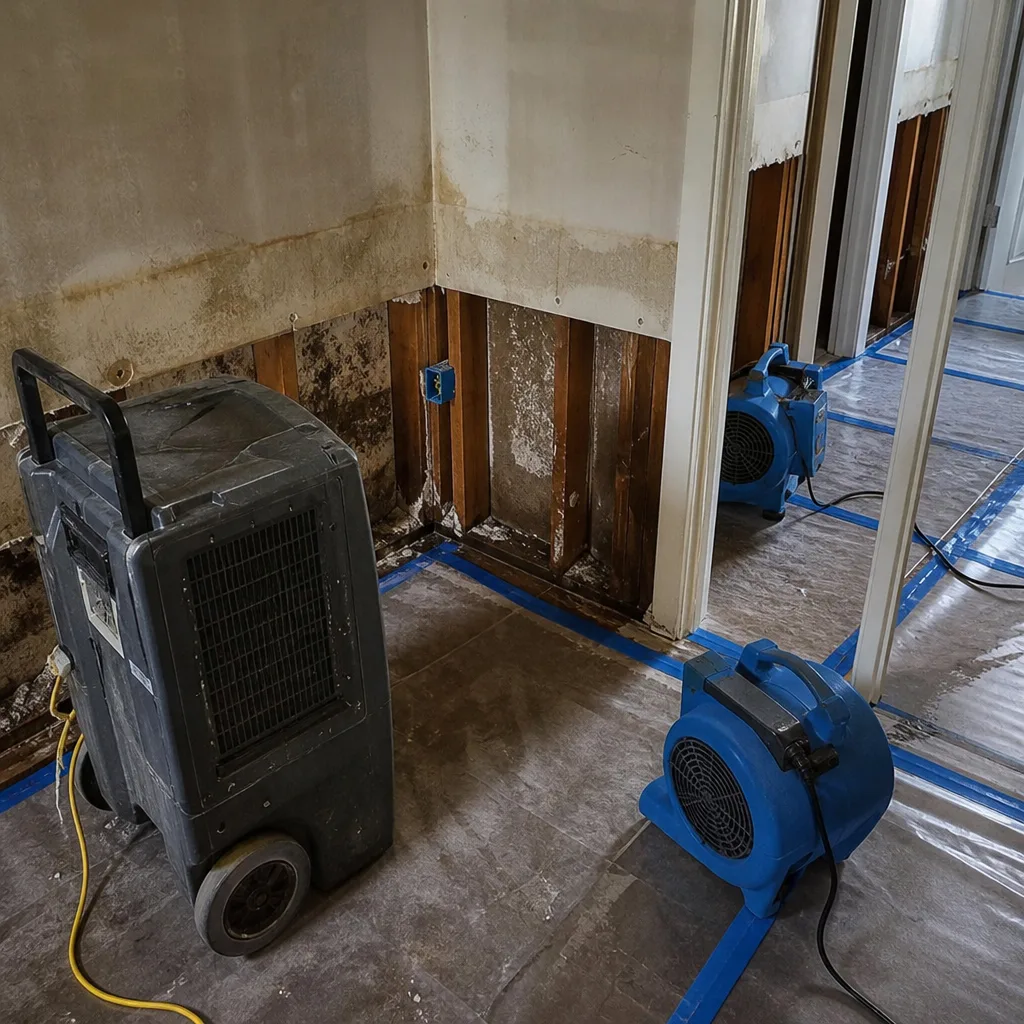 Before
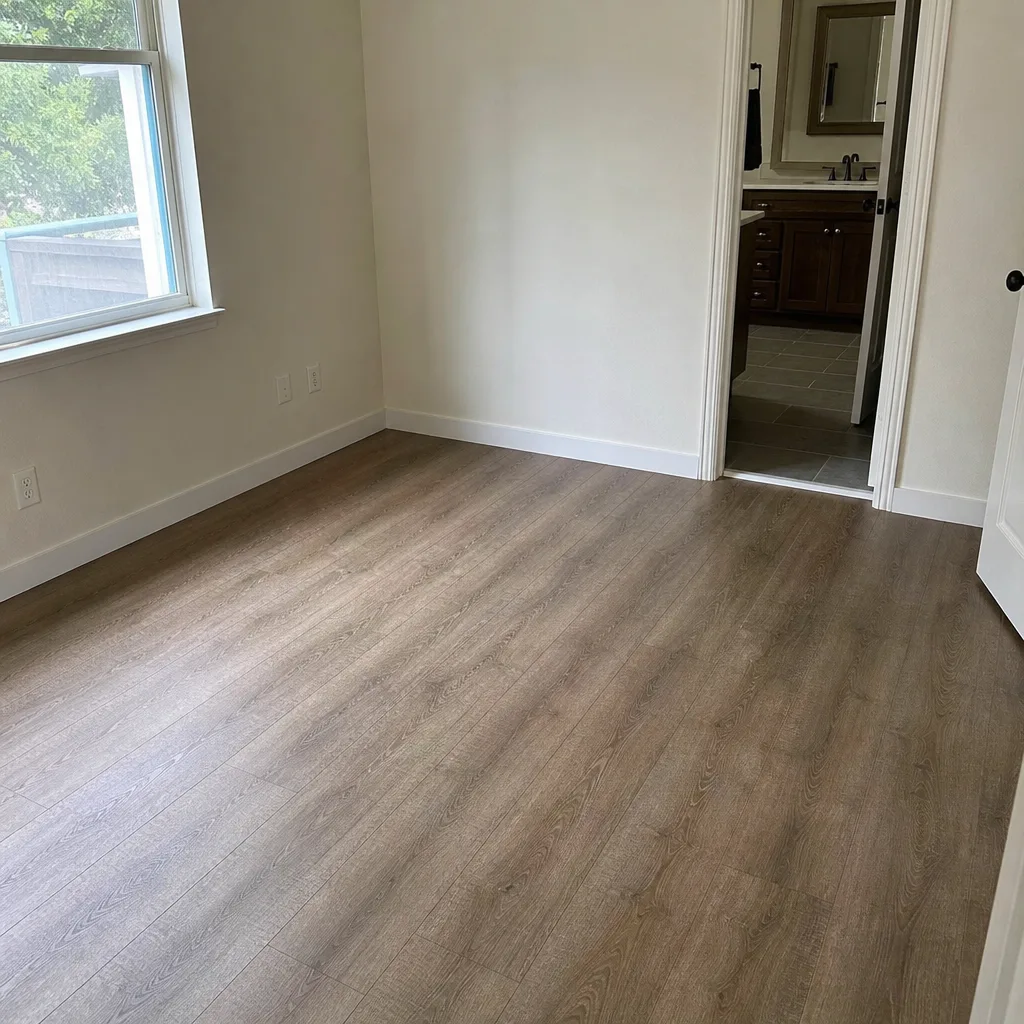 After
After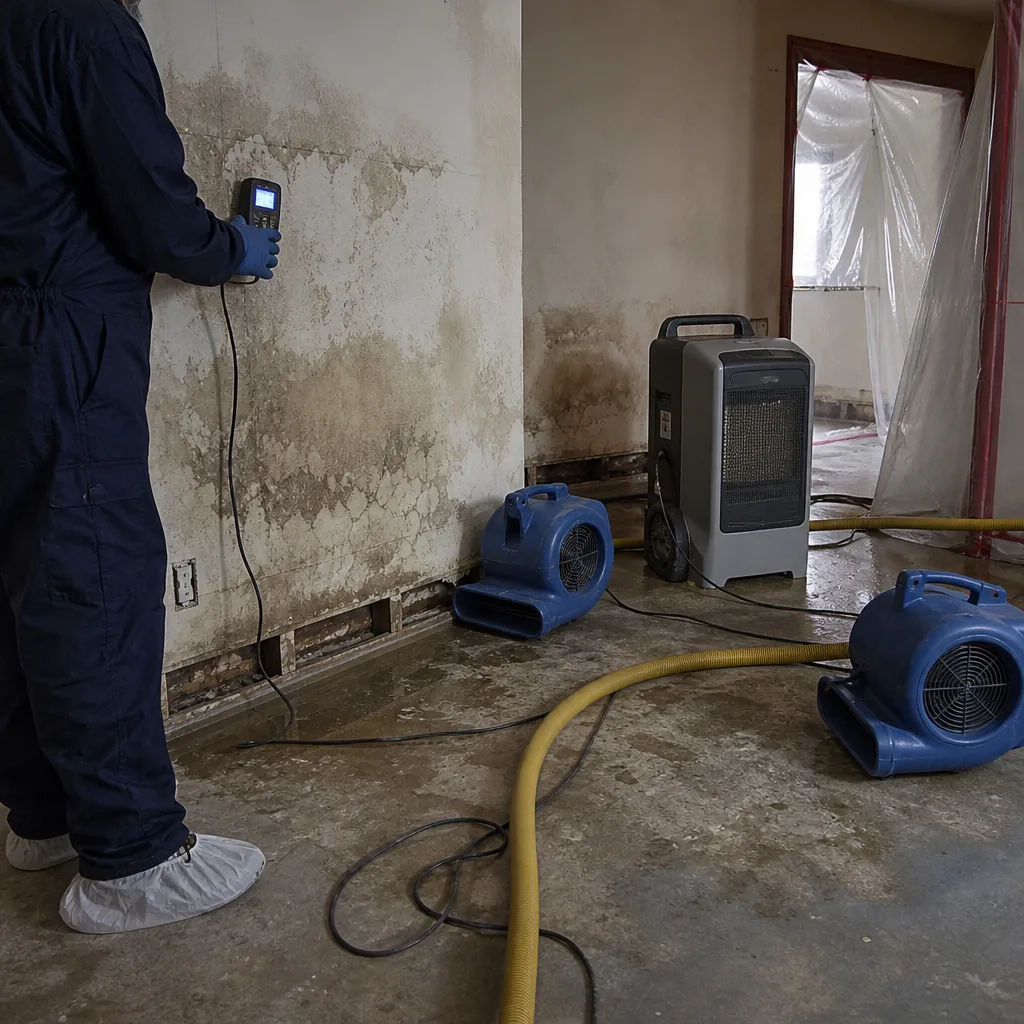 Before
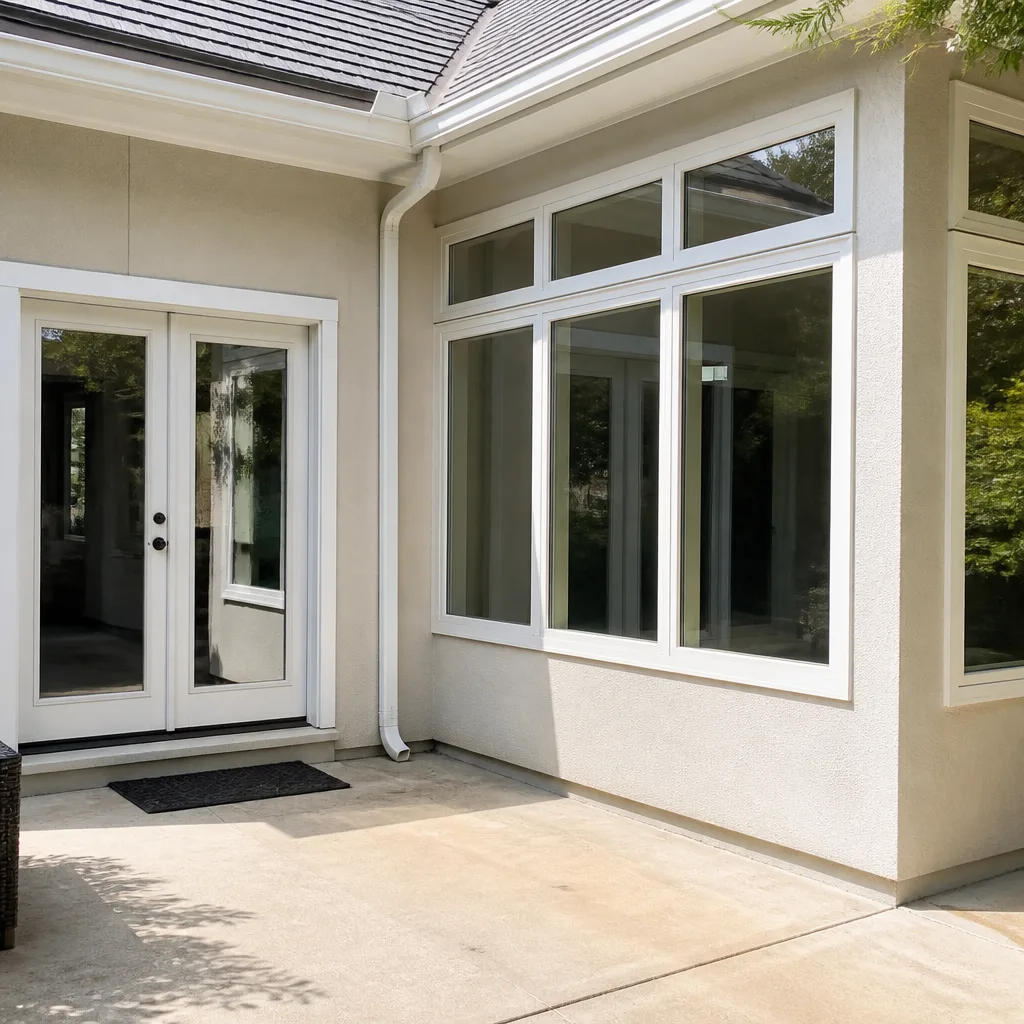 After
AfterPricing for Water Damage Restoration in Austin, TX
We believe in telling you the price before the work, not after the emergency is over. Here’s what Austin homeowners typically pay for common water damage restoration services: emergency water extraction runs $400 to $1,100, structural drying with dehumidification runs $600 to $1,800 per affected room, flood cleanup runs $1,200 to $4,000 depending on the water category and square footage, burst pipe restoration runs $1,500 to $5,000 including drywall and flooring repair, ceiling and roof leak water damage runs $500 to $2,000, and slab leak restoration with flooring removal and drying runs $2,000 to $6,000. The biggest factors are water category, how long water sat before we arrived, and whether the leak is under the slab or behind a wall. We give you a written price before any work starts, and that number does not change at the door. Call (361) 326-2081 for an exact quote. Estimates are free.
We Also Serve Cities Near Austin
Our crews serve the greater Austin metro area, including Round Rock, Leander, Kyle, and Taylor. If you’re in the northern suburbs or the southern corridor and dealing with water damage, Water Damage Restoration in Austin is available to you with the same written pricing and 365-Day Done Right Promise. We know the drive times, the housing stock, and the local conditions in each of these communities.
Serving Austin, TX - Our Local Coverage Area
We’re based in the Austin area and know this community well. Use the map below to see our service coverage - if you’re nearby, we can almost certainly help.
FAQs About Water Damage Restoration in Austin
Mold can start growing on wet drywall within 24 to 48 hours in Austin’s warm climate, and it moves faster in summer when temperatures stay above 90 degrees. If you’ve had a leak behind a wall or under flooring for more than a day, assume mold is present and call (361) 326-2081 immediately. We’ll assess moisture levels and set up drying before mold gets a head start.
In Austin homes east of I-35, particularly 1960s-80s ranches with the water heater in the garage, the pinhole leak is usually at the copper-to-galvanized transition behind the wall. Hard, limestone-filtered water corrodes galvanized pipe from the inside, and the joint between copper and galvanized is where the metal reacts most aggressively. By the time you see water on the garage floor, it’s often been dripping long enough to rot the baseplate.
Water from a burst cast-iron supply line is Category 1, meaning it’s clean water from your home’s fresh water system. That’s good news: Category 1 water can often be dried in place without full demolition. Our crews use moisture mapping to trace where the water traveled, then set up Dri-Eaz and Phoenix drying equipment to return materials to pre-loss moisture levels. Call (361) 326-2081 for a free assessment.
Slab leaks in Austin’s eastern neighborhoods cause more damage because water cannot drain downward through a concrete slab. It migrates horizontally under flooring and inside wall cavities, saturating drywall, baseplates, and cabinetry before you ever see a wet spot. In pier-and-beam homes, water often drips into the crawlspace where it’s visible or at least detectable during an inspection. Slab leaks hide.
Austin’s expansive clay soil swells when wet and shrinks when dry, which means a leak under your slab is not just a water problem, it’s a structural problem. Water can wick through concrete and travel far from the source, and the clay shifts as moisture changes, which can crack slabs and supply lines further. We factor soil conditions into our drying plan and document everything for your insurance claim.
Call Dryden Restoration Austin for Water Damage Help
If you have water where it shouldn’t be, call (361) 326-2081 right now. A live person answers, day or night. We’ll walk you through the first steps, give you a straight answer about what you’re dealing with, and schedule a crew with a named arrival window. Every job comes with a written price before work begins and the 365-Day Done Right Promise in writing. Led by Carl Brandt, our Austin team has been restoring homes since 2005, and we’ll treat yours the way we’d treat our own.
Written by Carl Brandt, Owner at Dryden Restoration Austin, serving Austin and surrounding communities since 2005.