
Last updated October 16, 2026
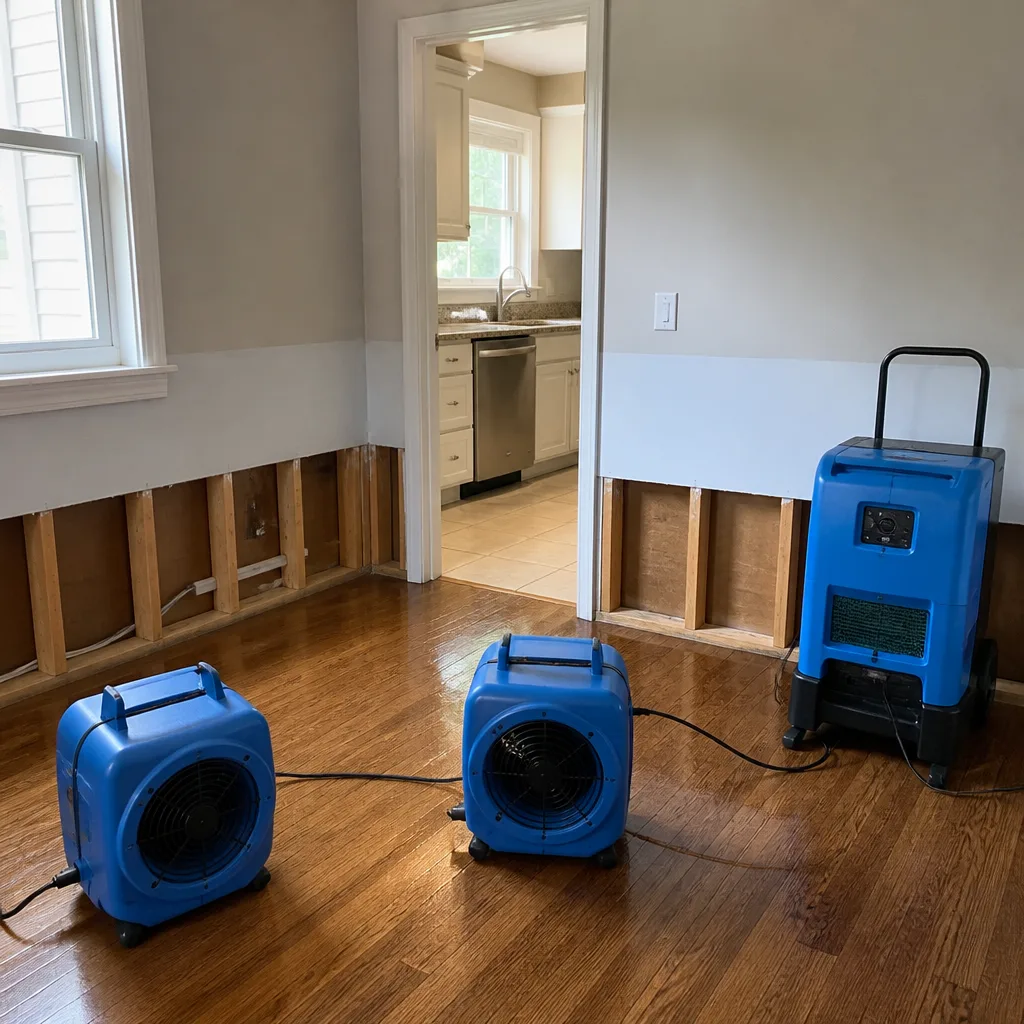 Water damage drying
 Fire & smoke cleanup
 Mold remediation
 Storm response
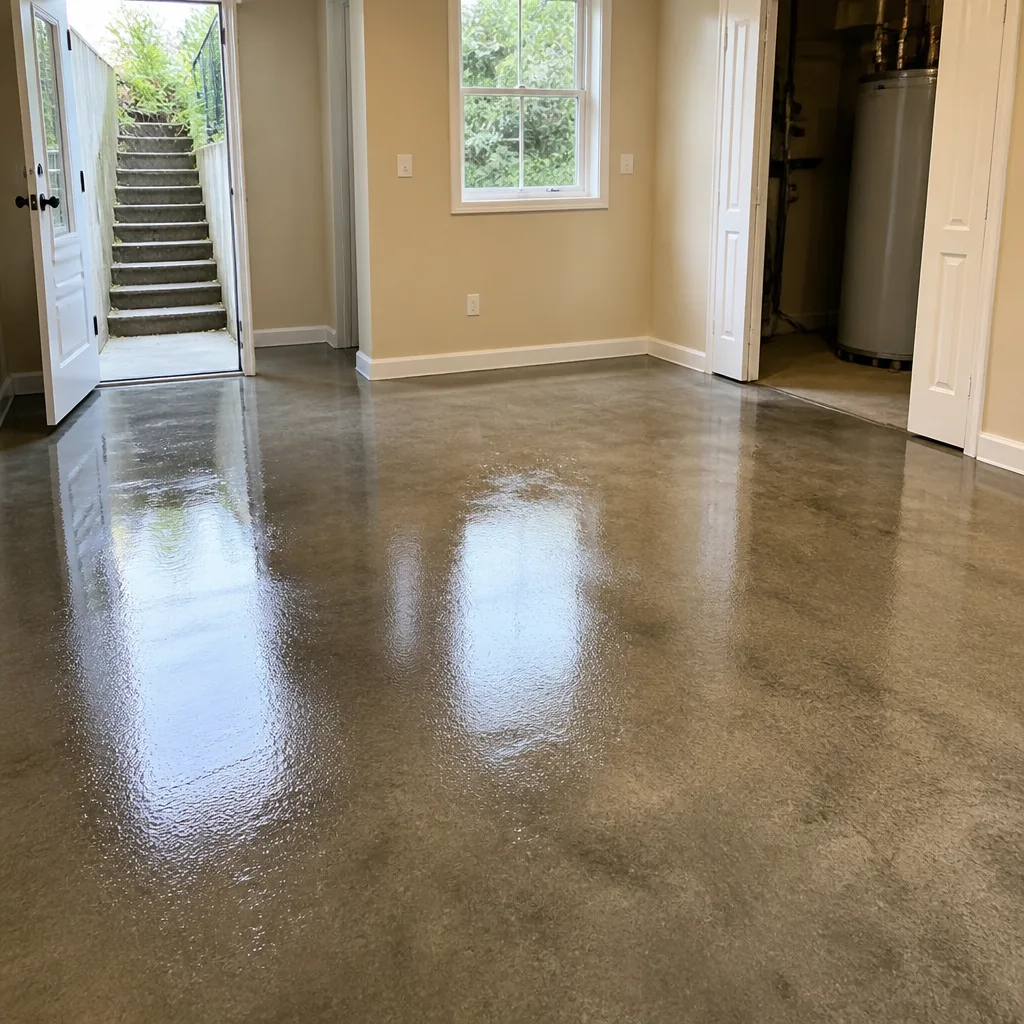 Sewage cleanup
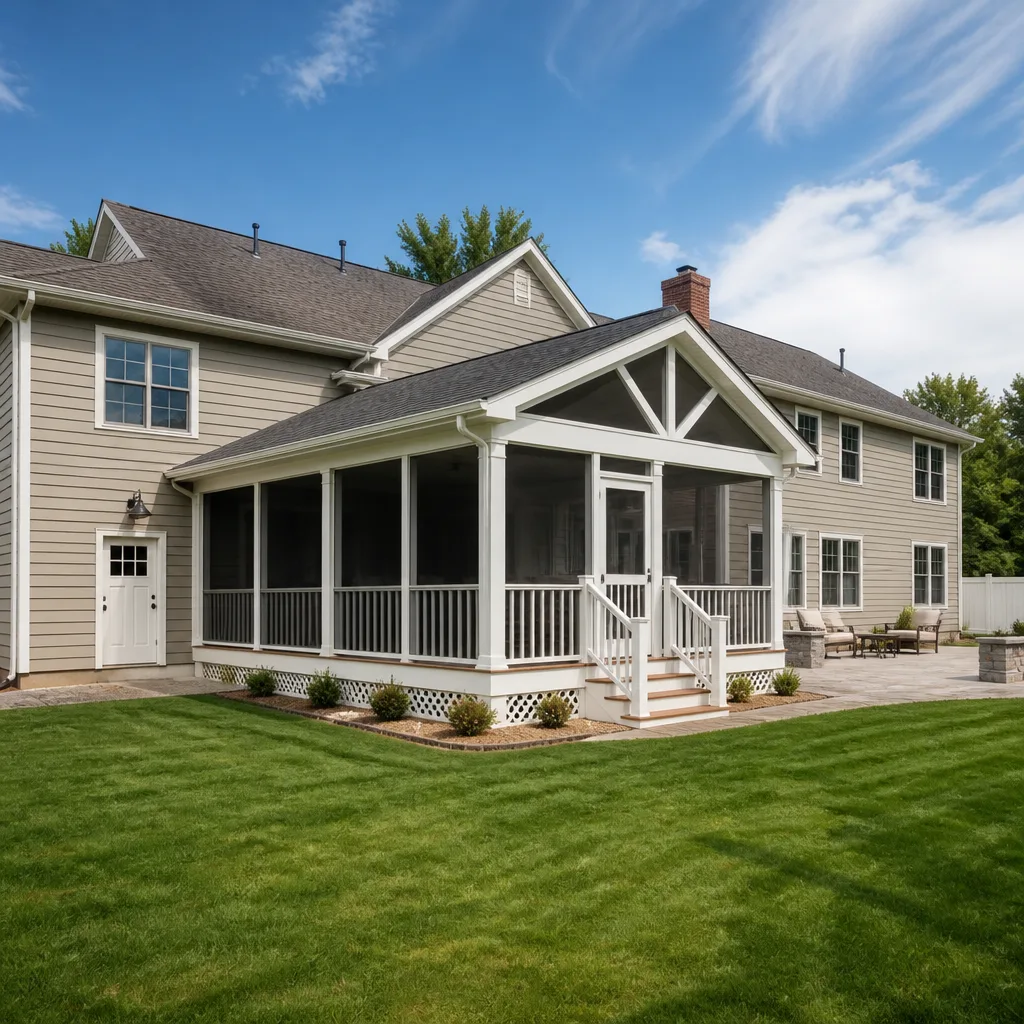 Reconstruction
Free visual inspection and a written scope of work before any mitigation begins - photos, moisture readings, and drying logs go in your claim file
The scope we write is the scope we bill. Anything new gets shown to you, in writing, before we touch it.
Get your free estimateHow to Hire a Damage Restoration Contractor in Austin: A Step-by-Step Guide
In Texas, damage restoration contractors are not required to hold a state license. That means anyone with a van, a dehumidifier, and a willingness to knock on doors can legally show up at your house after a flood and start tearing out drywall. Austin’s rapid growth has made the city a magnet for out-of-state restoration crews who follow storms, and for local operators who see water damage as a fast-cash business rather than a long-term repair responsibility. This guide walks you through exactly what to ask, what to request in writing, and what to walk away from before you sign anything, and you can explore more guides & resources once you’ve finished. You’ll learn the five documents that separate real professionals from opportunists, the contract clauses that quietly transfer your insurance claim to a stranger, and the interview questions that expose a sales pitch within 90 seconds.
Restoration work we handle
Quick Answer
To hire a damage restoration contractor in Austin, start by confirming the company has IICRC-certified technicians, current liability insurance, and a written guarantee before work begins. Request a written scope of work and a fixed price before any tool touches your home. Then verify their local standing through the Texas Secretary of State, Better Business Bureau, and recent Google reviews, and refuse any contract that asks you to sign an assignment of benefits without first talking to your insurance adjuster.
Table of Contents
- Why Austin Is Different: No State License Means No Safety Net
- The Five Documents to Request Before Work Starts
- Contract Clauses That Transfer Your Claim (And Why That Matters)
- How to Verify a Contractor in Under 10 Minutes
- Interview Questions That Reveal a Sales Pitch vs. a Real Plan
- Why the Lowest Bid After a Flood Often Costs More
- What a Good Restoration Process Looks Like in Austin
- Common Mistakes to Avoid
- When to Call a Professional
- Frequently Asked Questions
- The Bottom Line
Why Austin Is Different: No State License Means No Safety Net
Texas is one of a handful of states that does not require damage restoration contractors to carry a state-issued license. Plumbers, electricians, and HVAC technicians in Texas answer to the Texas Department of Licensing and Regulation. Restoration contractors answer to no state agency at all. In Austin, this matters more than in most places because the city sits in Flash Flood Alley, the stretch of Central Texas that sees some of the most sudden, intense rainfall events in the country, which is why we put together our Seasonal Damage Restoration Care for Austin: Year-Round Homeowner’s Guide. When a storm dumps four inches of rain on the Balcones Escarpment in an hour, water moves fast through the Hill Country watershed and into homes in Allandale, Bryker Woods, and East Austin. Homeowners are caught off guard, in the dark, with water rising, and the first person who answers the phone becomes the person they hire. That urgency is exactly what opportunistic operators count on.
What does the lack of state licensing mean in practice? It means you cannot call a state board to verify a restoration contractor is legitimate. It means the state will not discipline a contractor for shoddy drying work that leaves mold behind a wall. It means the burden of verification falls entirely on you. The good news is that reliable restoration companies in Austin already hold credentials that take the place of a state license. Look for IICRC (Institute of Inspection, Cleaning and Restoration Certification) certification, which requires technicians to pass written exams and demonstrate field competence in water damage restoration and mold remediation. Look for RIA (Restoration Industry Association) alignment, which indicates a commitment to the industry’s code of ethics. And look for proof of general liability insurance, ideally $1 million or more, because a contractor without insurance is a contractor whose mistakes become your problem.
The practical test is simple: ask the contractor to email you their certificate of insurance and their IICRC certification before you agree to anything. A legitimate operator will send both within the hour. A storm chaser will deflect, stall, or tell you insurance paperwork is “in the truck.”
For context on what proper water damage work looks like in this city, our Water Damage Restoration in Austin page explains the full drying process and what to expect from a certified crew.
The Five Documents to Request Before Work Starts
Too many Austin homeowners hire a restoration contractor after a flood the same way they’d hire a landscaper: a handshake, a verbal estimate, and a promise that “we’ll get you taken care of.” Then the bill shows up at double the estimate and the drying job leaves moisture in the wall cavities. The antidote is paperwork. Before any equipment comes off the truck, request these five documents in writing. If a contractor resists on any of them, that is your signal to move on.
1. Written Scope of Work
The scope is the “what’s getting done” document. It should list every room being addressed, every piece of equipment being installed, every material being removed or replaced, and the specific drying goals. A real scope says something like “Remove saturated drywall from the east wall of the living room to a height of 24 inches, install two Dri-Eaz LGR dehumidifiers and three air movers, and monitor daily until wood moisture content measures below 16%.” A red-flag scope says “dry out affected areas as needed.” Vague language is how a $4,000 extraction job becomes a $14,000 rebuild with no explanation of what changed. In Austin’s humid climate, a proper scope also addresses relative humidity (RH) targets, generally below 50%, because ambient moisture slows drying and invites mold. For a full breakdown of what to monitor, see our Water Damage Restoration Maintenance Checklist for Austin Homeowners.
2. Written Price Before Work Begins
Ask for a fixed price in writing before any demolition, extraction, or equipment placement begins. Not a range. Not a “cost per day plus materials” arrangement. A number. At Dryden Restoration Austin, every customer receives a written price before any work starts, and that number does not change at the door. A written price protects you from the slow creep of “unforeseen conditions” add-ons. It also gives you a benchmark to compare against other bids. In Austin, a typical water extraction and drying job for a single flooded room runs between $2,500 and $5,500 depending on the square footage affected, the class of water involved, and how long the water sat before extraction began. A full mold remediation project in Austin typically runs from $1,800 to $8,000 depending on the affected area. These are the ranges we see in the field; when a bid comes in far below them, ask what’s being left out.
3. IICRC Certification
The IICRC is the closest thing this industry has to a professional bar. Certification means the technician has passed standardized training in water damage restoration, applied structural drying, or mold remediation. It is not a guarantee of honest pricing, but it is a documented floor on technical competence. Ask for the certification number and verify it at the IICRC website. If the person walking into your home cannot produce an IICRC credential, that person is not a restoration professional; they are a laborer with a shop vac.
4. Proof of Current Liability Insurance
Request a certificate of insurance (COI) directly from the contractor’s insurance provider, not a photocopy the contractor printed at home. The COI will list general liability limits and, ideally, pollution liability coverage for mold work. A company carrying $1 million or more in general liability has skin in the game. A company that cannot produce a COI is one lawsuit away from disappearing and leaving your claim unpaid.
5. Written Guarantee
The guarantee is the document that tells you whether the contractor believes in their own work. A verbal promise like “if anything goes wrong, just call us” is worth nothing. A written guarantee that says “if the repair fails within 365 days, we return and correct it at no cost” is worth everything. Dryden Restoration Austin puts its 365-Day Done Right Promise in writing on every job, because a guarantee that only lives in a sales pitch is not a guarantee at all. When you compare written guarantees across Austin restoration companies, read the exclusions carefully. A guarantee that excludes all issues discovered after 30 days is not a guarantee; it is a calendar.
Collecting these five documents takes about twenty minutes on the phone and by email, and it eliminates most of the risk in hiring a water damage contractor in Austin before money changes hands.
Contract Clauses That Transfer Your Claim (And Why That Matters)
Here is a sentence most homeowners never hear until it is too late: “Just sign this and we’ll handle everything with your insurance company.” It sounds generous. It is often the most expensive sentence in the entire restoration process.
What that sentence usually means in practice is an assignment of benefits (AOB) clause, sometimes called direction billing in the restoration trade. When you sign an AOB, you transfer your right to collect insurance proceeds to the contractor. The contractor then bills the insurance company directly, and in a dispute, the contractor has the legal standing to pursue payment independently. That might sound like less hassle for you. In reality, it means the contractor now controls the financial conversation with your insurer, and you become a bystander. If the insurer disputes the contractor’s rates, you are not negotiating from strength; you are watching two parties fight over your claim while your home sits partially repaired.
Worse: some Austin-area restoration contracts bundle an AOB with a lien waiver or a work authorization that also commits you to the contractor’s “stated values” pricing schedule, which may exceed what your policy allows. When the insurance payment comes up short, the contractor may seek the difference from you personally. The time to learn this is before you sign, not after the claim settles.
What should you do instead? Tell the contractor you will bill your own insurance company. A reputable restoration company has no problem with this. We have worked with hundreds of Austin homeowners who paid us directly after their insurer approved the claim, and we provided photo documentation and moisture readings to support every line item. The phrase to listen for on the phone is “We’ll work directly with your adjuster.” That is different from “We’ll take over your claim.” The first is professional. The second is a red flag.
Also look for clauses that authorize the contractor to begin work “immediately upon verbal approval” without a signed scope or price. In Texas, verbal contracts for home repairs are enforceable, and “verbal approval” can be claimed after the fact. Do not let anyone start work until the five documents are in your hand.
How to Verify a Contractor in Under 10 Minutes
You do not need to be an investigator to check out a restoration contractor. You need a phone, an internet connection, and ten minutes. Do this before you sign anything.
- Texas Secretary of State (3 minutes): Go to the Texas Comptroller or Secretary of State website and search the business name. If the company is a registered entity (LLC, corporation, limited partnership), it will appear with a filing number and registered agent. A restoration company operating in Austin without a registered business entity is not a business; it is a person with a truck and a temporary phone number.
- Better Business Bureau (2 minutes): Search the Austin BBB directory. Look for the company’s rating and, just as important, the pattern of complaints. One complaint about a scheduling mix-up is normal. Six complaints about unexplained price increases or incomplete drying work are a pattern. A company with no BBB presence at all is not necessarily bad, but it means you have fewer verification tools.
- Google Reviews with a skeptical eye (3 minutes): Filter to the most recent reviews and read the one- and two-star entries first. Notice the owner’s responses. A company that answers negative reviews with specific, factual responses (or offers to make things right) is more trustworthy than a company with a perfect 5.0 average that responds to every review with “Thank you for choosing us.” Also check the reviewer profiles: a burst of 20 reviews in one week from accounts with no other review history suggests review generation, not genuine customer experience.
- Confirm the physical address (2 minutes): Ask for the company’s Austin street address and look it up on Google Maps. Restorations companies that follow storms often list a Mailboxes Etc. or virtual office address. A real local operation has a real footprint. When you call, a live person should answer. At Dryden Restoration Austin, a live person answers every call, 24 hours a day, 7 days a week. If you hit voicemail at 2 p.m. on a Tuesday for a company claiming 24/7 emergency service, that claim is already false.
This ten-minute check catches the storm chasers, the unregistered operators, and the review-farm businesses. It is not exhaustive due diligence, but it is enough to remove the bottom tier before they ever set foot in your home.
Interview Questions That Reveal a Sales Pitch vs. a Real Plan
When a restoration contractor walks through your flooded Austin home, they are either building a plan or building a pitch. You can tell the difference within the first five questions. Here are the four that matter most, and what a real professional’s answer sounds like.
“What moisture readings would tell you the job is done?” A professional answers with numbers: wood moisture content below 16%, relative humidity below 50%, moisture meter readings in wall cavities matching the dry baseline in unaffected rooms. A salesperson answers with “We’ll know it’s dry when it’s dry.” That is not an answer; that is a shrug with a lanyard. Real drying work is governed by what the trade calls psychrometric drying: the science of air movement, temperature, and humidity. A technician who cannot explain the principles of psychrometric drying in plain English is not a technician who can be trusted to know when your walls are actually dry.
“What equipment will you use, and why?” Listen for specific brand names and specific reasoning: “We’ll run two Phoenix air movers and a Dri-Eaz LGR (low grain refrigerant) dehumidifier in the living room, because LGRs pull moisture more efficiently in the 72-78 degree conditions typical of an Austin home in summer.” Generic answers like “industrial strength drying equipment” are meaningless. Professional-grade equipment from manufacturers like Dri-Eaz, Phoenix, and XPOWER costs thousands of dollars per unit. A company that names machines is a company that owns machines. A company that says “dehumidifiers and fans” may be renting from Home Depot.
“How do you handle containment for mold work?” If the conversation is about mold remediation, this question is the fastest tell. Proper mold remediation in Austin requires negative air pressure: containment barriers, HEPA-filtered air scrubbers, and strict protocols to keep spores from spreading to clean rooms. A contractor who says “we don’t usually bother with containment” or “we’ll just spray it with bleach” has just disqualified themselves. For more on what proper mold work involves, see our Mold Remediation in Austin page.
“Can I see your scope and price in writing before you start?” The answer should be “Yes, here’s what we’ll do and what it costs.” Any hesitation, any “well, we’ll have to see what we find once we open the wall,” any “we don’t work that way” means you are talking to someone who wants the freedom to change the number after the fact. The Dryden Restoration Austin standard is a written price before any work starts, every time. It is not a premium service. It is the minimum standard a homeowner should accept.
Why the Lowest Bid After a Flood Often Costs More
The temptation after a water event is to hire the cheapest contractor who can show up fastest. In Austin’s restoration market, that temptation is expensive. Here is the specific math.
Imagine a homeowner in the Mueller neighborhood whose water heater fails overnight and sends 40 gallons of water into a utility room and adjacent hallway. Two contractors bid. The first quotes $2,200 to extract the standing water, remove the wet baseboards and saturated drywall, and set up two air movers and a single dehumidifier for three days. The second quotes $4,100 for the same initial scope, plus more aggressive equipment coverage: four air movers, two LGR dehumidifiers, daily moisture monitoring, and a written drying protocol tied to a 16% moisture content target.
The homeowner takes the $2,200 bid. The single dehumidifier runs, the air moves, and three days later the contractor pulls the equipment and says “looks dry.” The visible surfaces are dry. The wall cavity behind the baseboard is not, because a single dehumidifier on a humid Austin day cannot pull enough moisture from a closed cavity. Sixty days later, the homeowner notices a musty odor rising from the baseboard line. A mold inspector finds Stachybotrys (black mold) colonizing the wall cavity. Now the job is a full mold remediation project in Austin: containment, HEPA air scrubbers, remove and replace drywall, treat framing, and re-test. Total cost: $6,500 to $9,000, on top of the original $2,200, and the homeowner’s insurance company may now dispute coverage because the “professional remediation” was not done to standard the first time.
The $4,100 bid, by contrast, would have dried the wall cavity to spec in the first place. The cheapest bid after a flood is often the down payment on a mold claim. When we are asked to assess these situations in Austin, we typically find that the original drying work was never validated with moisture meters, because the equipment simply was not there to achieve the result. Proper drying is not a place to save money; it is the entire point.
What a Good Restoration Process Looks Like in Austin
What does the process at a professional Austin restoration company actually look like, from the first phone call to the final walkthrough? Here is the step-by-step, and it is close to what we do at Dryden Restoration Austin.
- First contact (24/7): You call, a human answers, and you describe the problem. You get a named arrival window, not “sometime this afternoon.”
- On-site assessment: A uniformed, background-checked technician arrives within the window, photographs the damage, and takes moisture readings in the affected and unaffected areas to establish a baseline.
- Written scope and price: Before any equipment is moved from the truck, you receive a written scope of work and a fixed price. You read it, ask questions, and sign only when you understand the plan.
- Equipment deployment: Professional-grade machines go in: Dri-Eaz or Phoenix dehumidifiers, XPOWER air movers, and if needed, an Injectidry system for hard-to-dry wall and ceiling cavities. The technician explains each machine in plain English.
- Daily monitoring: Someone returns daily to check moisture readings, adjust equipment placement, and document progress for your insurance claim.
- Drying validation: The job is not done when the machine is pulled. It is done when moisture readings confirm the structure has returned to its dry baseline: wood below 16%, RH below 50%.
- Final walkthrough: The technician walks the property with you, reviews the documentation, and leaves you with the written 365-Day Done Right Promise. The site is clean. The place is drier than it was before the water event.
This process is not a secret. It is the industry standard when work is performed to IICRC, RIA, and IFA standards. The reason it is the exception in Austin is that many operators skip steps 3 and 6, because writing a fixed price and verifying drying with meters are the two steps that expose mediocre work. When you interview a contractor, ask them to walk you through their process step by step. If they cannot describe a monitoring schedule and a drying-validation threshold, you have just learned everything you need to know.
Common Mistakes to Avoid
- Hiring the first contractor who answers the phone at night. After a flood in Austin, urgency is real, but the first available crew is sometimes the first one no other homeowner would hire in daylight. Take ten minutes to run the verification checks before you sign.
- Signing the work authorization before reading the AOB clause. Buried on page two of many restoration contracts in Austin is a direction-billing clause that transfers your claim. Ask a lawyer or your adjuster to review it before you sign. It costs nothing to refuse.
- Accepting a verbal estimate. “Around $3,500” is not a price. Request the written scope and fixed price described earlier in this guide. A contractor who refuses is not someone you want in your home.
- Paying 50% or more upfront. In Texas, it is common for restoration contractors to request a deposit, but no reputable company asks for full payment before the work is done and validated. A request for more than half up front is a warning sign.
- Letting the contractor “handle the insurance company.” You hired the contractor. You own the claim. Stay in the loop with your adjuster, and provide the photo documentation you receive from the restoration process.
- Waiting to address minor water stains. A persistent water stain on an Austin ceiling after a heavy rain event is often the visible sign of a roof leak that is slowly soaking insulation and drywall. What starts as a cosmetic stain becomes a mold colony; what starts as a $600 repair becomes a $4,000 remediation.
- Choosing the lowest bid without comparing scope. As the earlier example shows, a low bid that lacks proper drying validation is a high-cost decision delayed by two months. Compare scopes, not numbers.
When to Call a Professional
Some water problems are DIY-able: a small spill under the kitchen sink you catch immediately, a damp patch from an overflowing toilet you can mop within minutes. But when water has penetrated drywall, soaked into carpet pad, or sat for more than an hour in any area larger than a bathroom, the stakes shift. Moisture moves into wall cavities and under flooring, and the surface can feel dry while the structure behind it is not. If you smell any mustiness even faintly, if paint is bubbling, if baseboards are warping, or if you can see water staining spreading up from the floor, call someone who owns moisture meters and industrial drying equipment. Mold remediation is never DIY; disturbing a mold colony without containment spreads spores through the whole house. Fire damage restoration involves structural hazards and smoke-penetrated materials that require professional evaluation. Dryden Restoration Austin offers free estimates in Austin; call (361) 326-2081 and a live person will answer.
Frequently Asked Questions
In the Austin market, a typical single-room water extraction and drying job runs between $2,500 and $5,500, while a multi-room flood or a sewage backup can run from $6,000 to $15,000 and up depending on the class of water and the extent of demolition. The single biggest variable is how long the water sat before extraction began. Call (361) 326-2081 for a written quote on your specific situation.
Most Texas homeowners policies cover sudden and accidental water damage, such as a burst pipe or a water heater failure, but not gradual leaks or flood-related damage, which require a separate flood policy through the National Flood Insurance Program. Your adjuster will ask for documentation of the damage; a restoration contractor should provide photo documentation and moisture readings to support every line item.
A local Austin restoration company can typically arrive within 1 to 2 hours for a water emergency. Dryden Restoration Austin answers every call live, 24 hours a day, 7 days a week, and provides a named arrival window rather than a vague “sometime today.” Ask any contractor you contact for a specific arrival window in writing.
If standing water soaked into drywall, flooring, or wall cavities, cleaning alone is not sufficient. Water trapped behind building materials does not evaporate quickly in Austin’s humid climate, and it will support mold growth within 48 to 72 hours. A professional uses moisture meters to determine whether the structure itself is wet; if it is, drying and possibly removal are required, not a surface cleaning.
You do, with support from your contractor. A professional restoration company will provide photo documentation, moisture readings, and a detailed written scope that your adjuster can use to evaluate the claim. A contractor who wants to “take over” your claim through an assignment of benefits is asking you to transfer your legal rights; talk to your adjuster before signing anything like that.
Check the Texas Secretary of State for a business registration, the Better Business Bureau for complaint patterns, and Google reviews for recent local feedback. Ask for IICRC certification numbers, a certificate of liability insurance, and a physical Austin street address. Ten minutes of verification before you sign prevents most of the problems homeowners report.
The Bottom Line
Hiring a damage restoration contractor in Austin without a state licensing safety net comes down to documentation, verification, and refusing to be rushed. Request the five documents: written scope, written price, IICRC certification, proof of insurance, and a written guarantee. Check the Texas Secretary of State, BBB, and review patterns before you sign. Refuse assignment of benefits clauses without consulting your adjuster. Ask the interview questions that separate technicians from salespeople. And remember that the lowest bid is often the most expensive choice when it skips the drying validation that prevents mold. Get it in writing, verify it, and do not let urgency replace judgment. For a free estimate in Austin, call (361) 326-2081.
Written by Carl Brandt, Owner at Dryden Restoration Austin, serving Austin since 2005.
See the difference
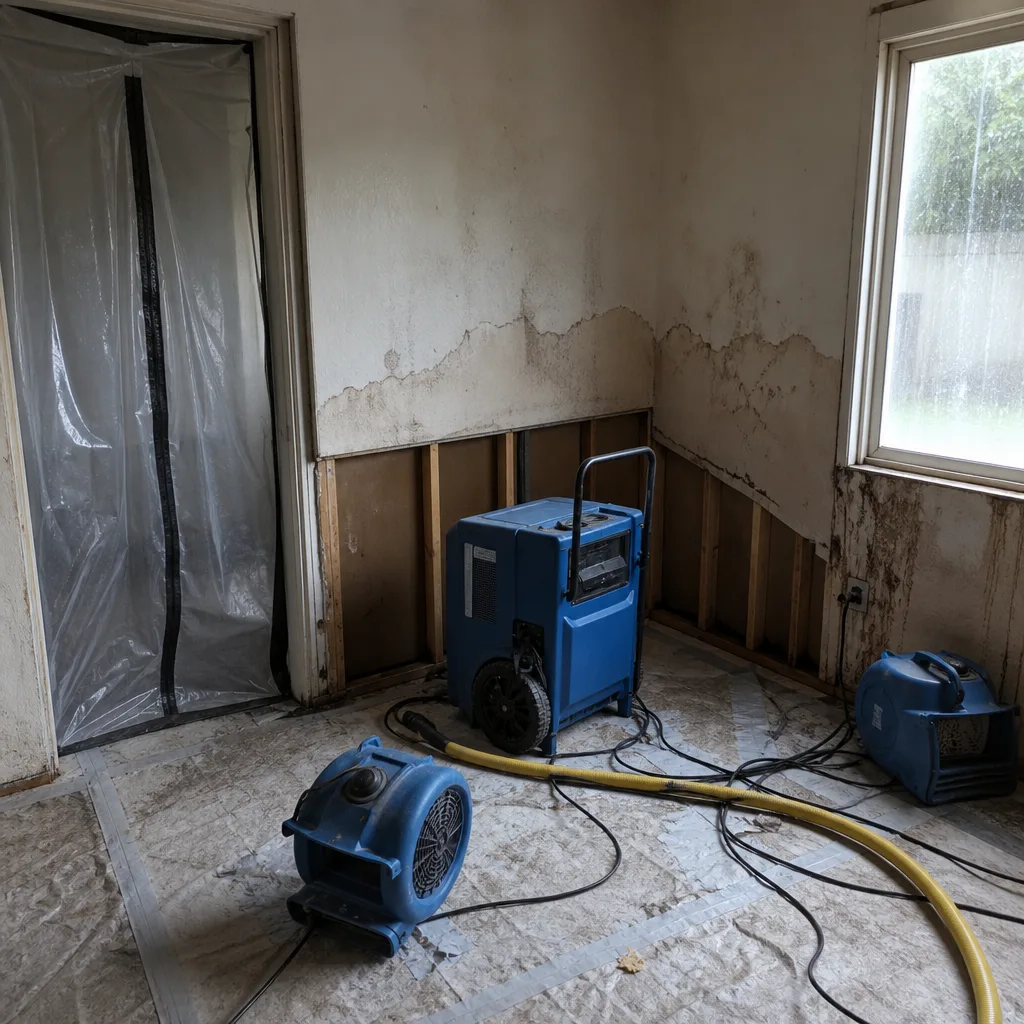 Before
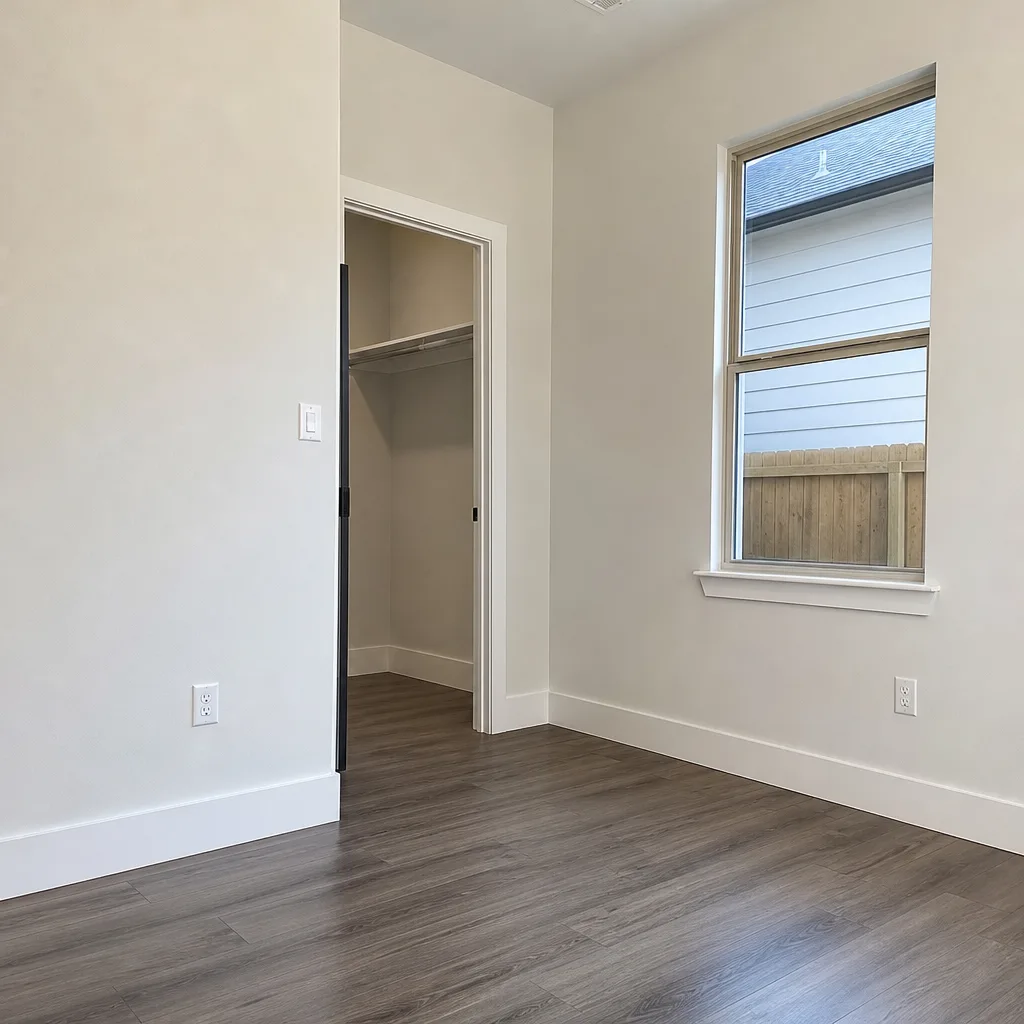 After
After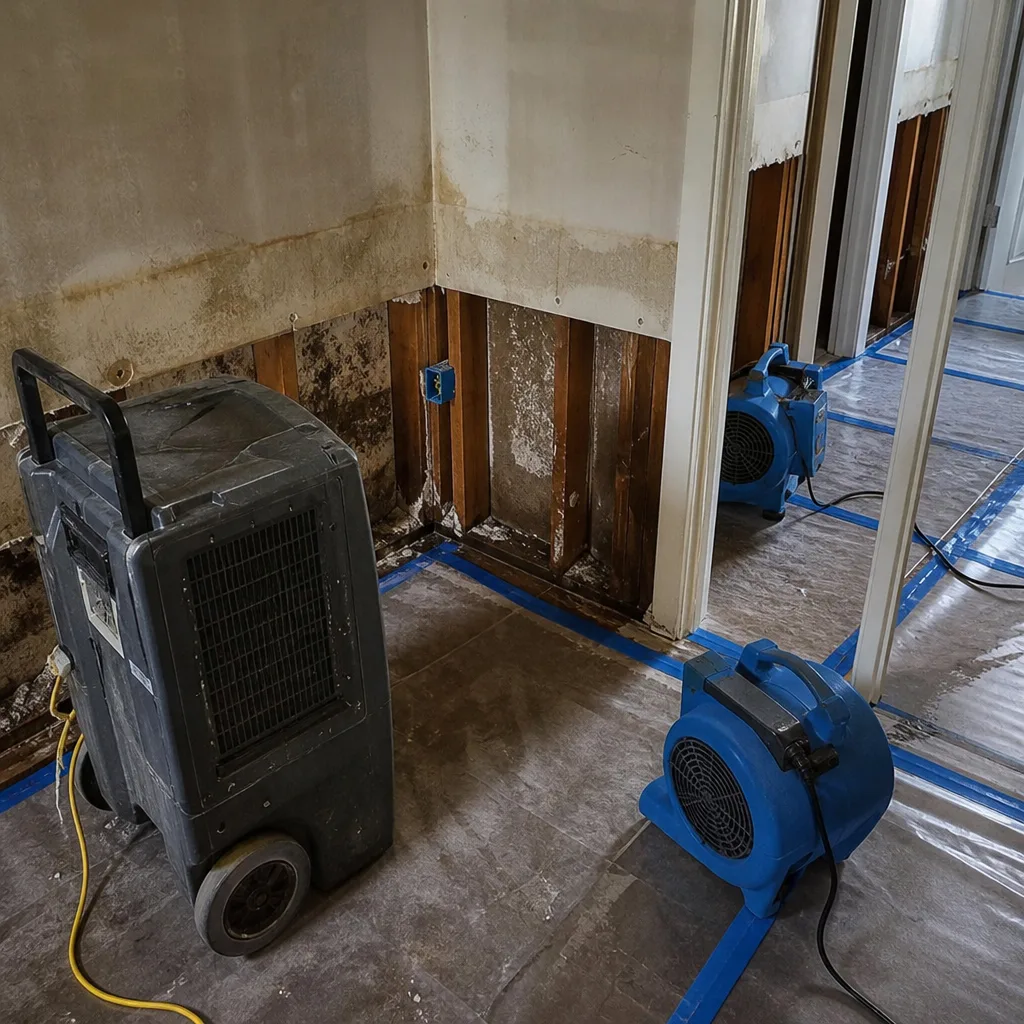 Before
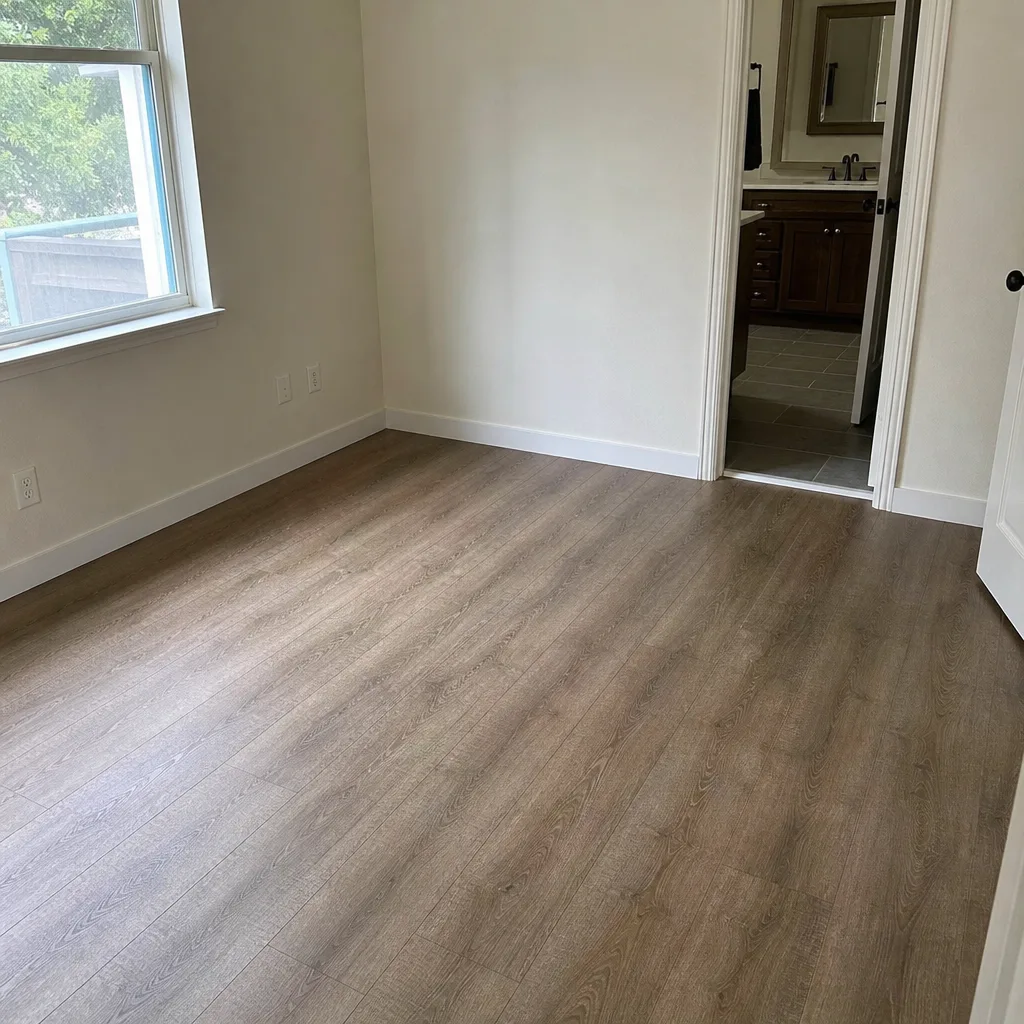 After
After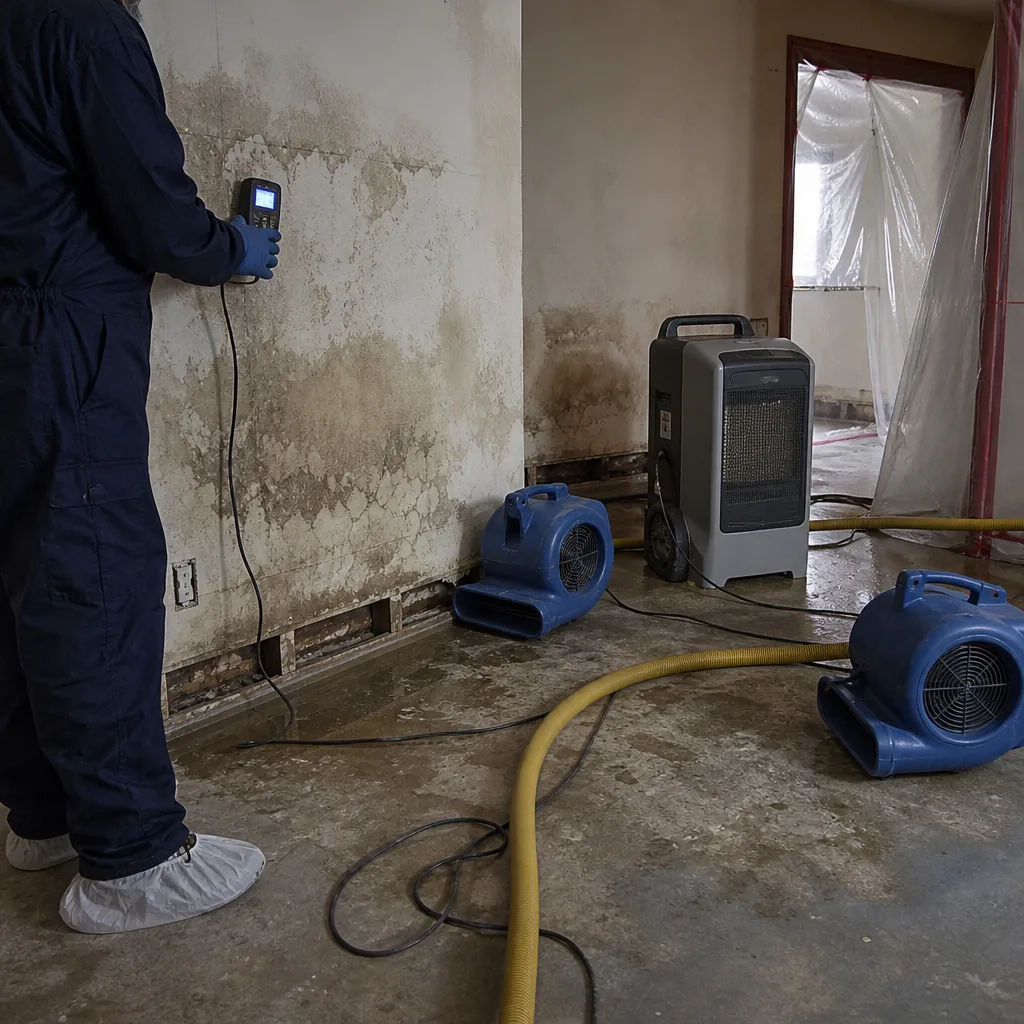 Before
 After
After